Lighting Design Creates the Identity of a Space
In premium interior design, lighting is not simply about illuminating a room. It is an important design element that influences the atmosphere, visual balance, architectural character, and overall experience of a space.
For lighting designers, architects, interior design studios, and premium lighting brands, customized lighting offers the opportunity to create products that complement a specific design concept.
From decorative pendant lights in luxury hotels to architectural wall fixtures in commercial spaces, every lighting detail can contribute to a distinctive environment.
However, turning a creative lighting concept into a high-quality manufactured product requires close cooperation between designers, engineers, and experienced lighting manufacturers.
LEDVAST Lighting provides customized lighting manufacturing and OEM/ODM services for international customers, combining engineering capabilities with production facilities in China and Thailand.
This article explains the essential considerations when developing premium custom lighting for modern interior and architectural projects.
1. Why Choose Custom Lighting for Premium Interior Projects?
Standard lighting products are suitable for many applications. However, high-end interior projects often require more specialized solutions.
Custom lighting can provide several advantages.
Design Differentiation
Unique lighting fixtures help create a recognizable visual identity for hotels, restaurants, residential developments, retail environments, and commercial spaces.
Better Architectural Integration
Customized dimensions, mounting systems, finishes, and light distribution can help lighting fixtures integrate more naturally into the surrounding architecture.
Consistent Design Language
Developing a coordinated collection of pendant lights, wall sconces, ceiling fixtures, table lamps, and floor lamps helps create a consistent interior design style.
Material and Finish Flexibility
Designers can select materials, colors, textures, and finishes that match the project’s furniture, architectural elements, and interior palette.
Functional Customization
Lighting products can be developed around specific installation conditions, lighting performance requirements, and smart control functions.
2. Choose the Right Lighting Style and Product Category
Before starting custom lighting development, designers should identify the intended application and product category.
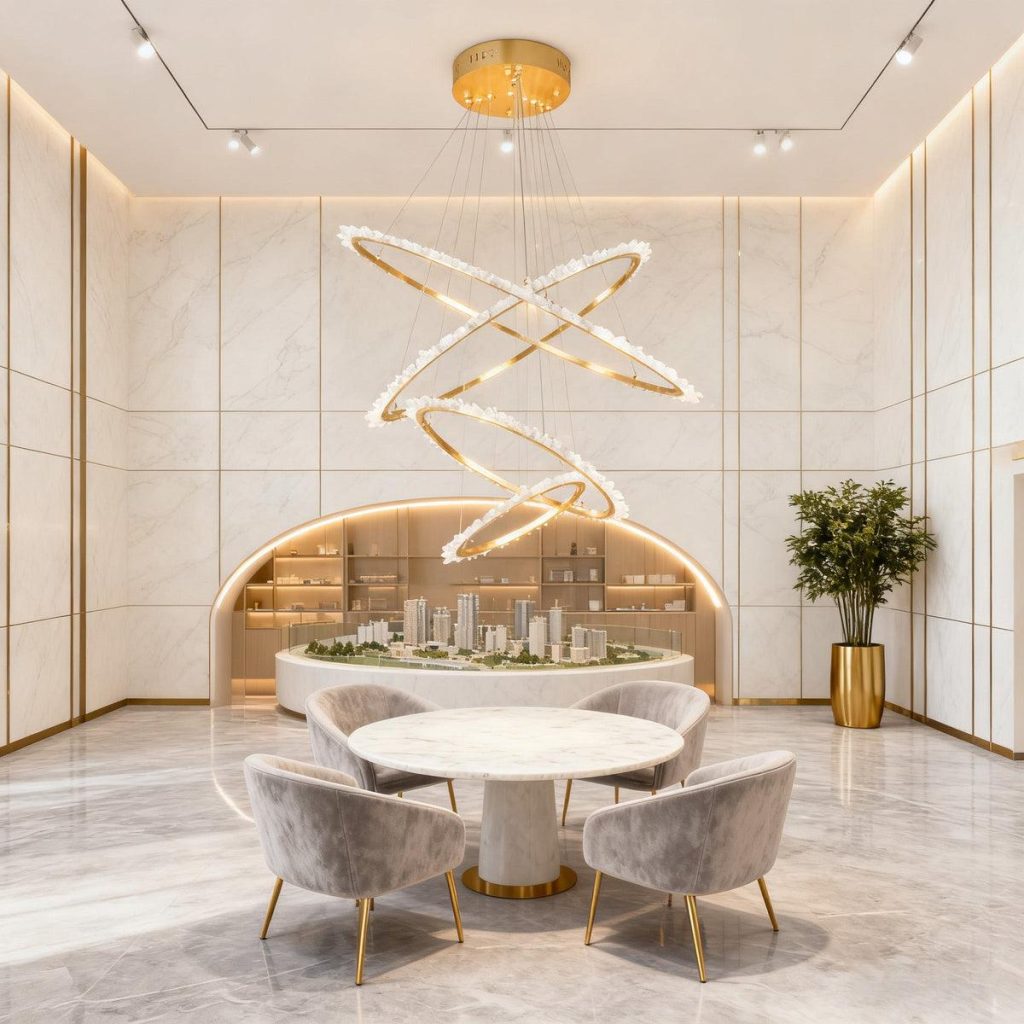
Decorative Pendant Lighting
<AsyncImage query=”luxury contemporary custom pendant lighting above hotel restaurant dining table” aspectRatio=”16:9″/>
Pendant lights are commonly used in hotel lobbies, restaurants, dining spaces, reception areas, and residential interiors.
Customization may include fixture dimensions, suspension systems, metal structures, decorative shades, light sources, and surface finishes.
Contemporary Wall Sconces
<AsyncImage query=”premium contemporary sculptural wall sconces modern luxury hotel corridor” aspectRatio=”16:9″/>
Wall sconces can provide both decorative and functional illumination.
Custom wall lighting can be developed with different housing shapes, indirect lighting effects, materials, finishes, and mounting arrangements.
Architectural LED Lighting
<AsyncImage query=”modern architectural LED linear lighting recessed downlights contemporary commercial interior” aspectRatio=”16:9″/>
Architectural lighting emphasizes the relationship between light and space.
Typical products include recessed downlights, linear fixtures, track lights, wall washers, panel lights, and other integrated LED lighting solutions.
Bathroom and Mirror Lighting
<AsyncImage query=”premium illuminated bathroom mirror LED vanity lighting modern luxury bathroom” aspectRatio=”16:9″/>
Bathroom and mirror lighting require particular attention to visual comfort, color rendering, electrical safety, and environmental protection.
Depending on the project, customized products may include stainless steel mirror lamps, acrylic mirror lights, frameless mirror lighting, and smart mirror lamps.
Table and Floor Lamps
<AsyncImage query=”luxury contemporary decorative table lamp floor lamp premium interior design” aspectRatio=”16:9″/>
Portable decorative lighting helps create comfortable environments in hotel rooms, residential spaces, lounges, and hospitality projects.
Customized dimensions, materials, controls, charging systems, and finishes can help develop distinctive product collections.
3. Material Selection: The Foundation of Premium Lighting Design
Material selection affects product appearance, durability, manufacturing complexity, and cost.
The following materials are commonly considered for premium lighting development.
Aluminum
Aluminum is widely used for architectural and contemporary lighting because of its relatively low weight, design flexibility, and suitability for precision manufacturing.
Applications include downlights, linear fixtures, wall lamps, ceiling fixtures, and decorative lighting structures.
Stainless Steel
Stainless steel is suitable for contemporary decorative products, bathroom fixtures, and mirror lighting.
Its surface can be developed with different treatments depending on the required visual effect.
Acrylic
Acrylic offers flexibility in shape and light diffusion.
It is commonly used in decorative lighting, illuminated panels, diffusers, and modern mirror lamps.
Glass and Crystal
Glass and crystal can provide distinctive decorative effects for premium hospitality and residential lighting.
Designers should consider optical appearance, thickness, weight, manufacturing tolerances, and installation safety.
Customized Metal Finishes
Surface treatment can significantly influence the final appearance of a product.
Possible finishing options include:
- Matte and gloss powder coating.
- Customized painted finishes.
- Brushed metal effects.
- Polished surfaces.
- Decorative plating.
- Other project-specific treatments.
Working with an experienced manufacturer helps ensure that the selected materials and finishes are compatible with the product’s structure and production requirements.
4. Balance Aesthetic Design with Lighting Performance
A premium lighting product must perform as well as it looks.
When developing custom lighting, designers and manufacturers should evaluate several technical factors.
Color Temperature
Different spaces require different lighting atmospheres.
Warm white lighting is often considered for hospitality and residential environments, while neutral white lighting may be appropriate for offices and other functional spaces.
The final CCT should be determined by the project’s lighting concept and requirements.
Color Rendering
Color rendering affects how furniture, finishes, artwork, materials, and decorative objects appear under artificial lighting.
Designers should define suitable CRI requirements according to the application.
Beam Angle and Light Distribution
Different lighting applications require different beam distributions.
For example, accent lighting may require controlled directional beams, while general lighting may require broader and more uniform illumination.
Glare Control
Visual comfort is important in hotels, offices, residential spaces, and other environments where people spend extended periods.
Optical design, shielding, fixture positioning, and light source integration should all be considered.
Dimming and Smart Controls
Modern lighting projects may require dimming, CCT adjustment, occupancy-based control, or smart lighting integration.
These functions should be considered during the early engineering stage rather than added after product development is complete.
5. The Custom Lighting Development Process
A professional development process helps ensure that the original design concept can be translated into a reliable manufactured product.
Stage 1: Design Concept and Project Requirements
The designer or brand provides initial sketches, inspiration images, reference products, or technical drawings.
The manufacturer evaluates the proposed design and identifies possible engineering considerations.
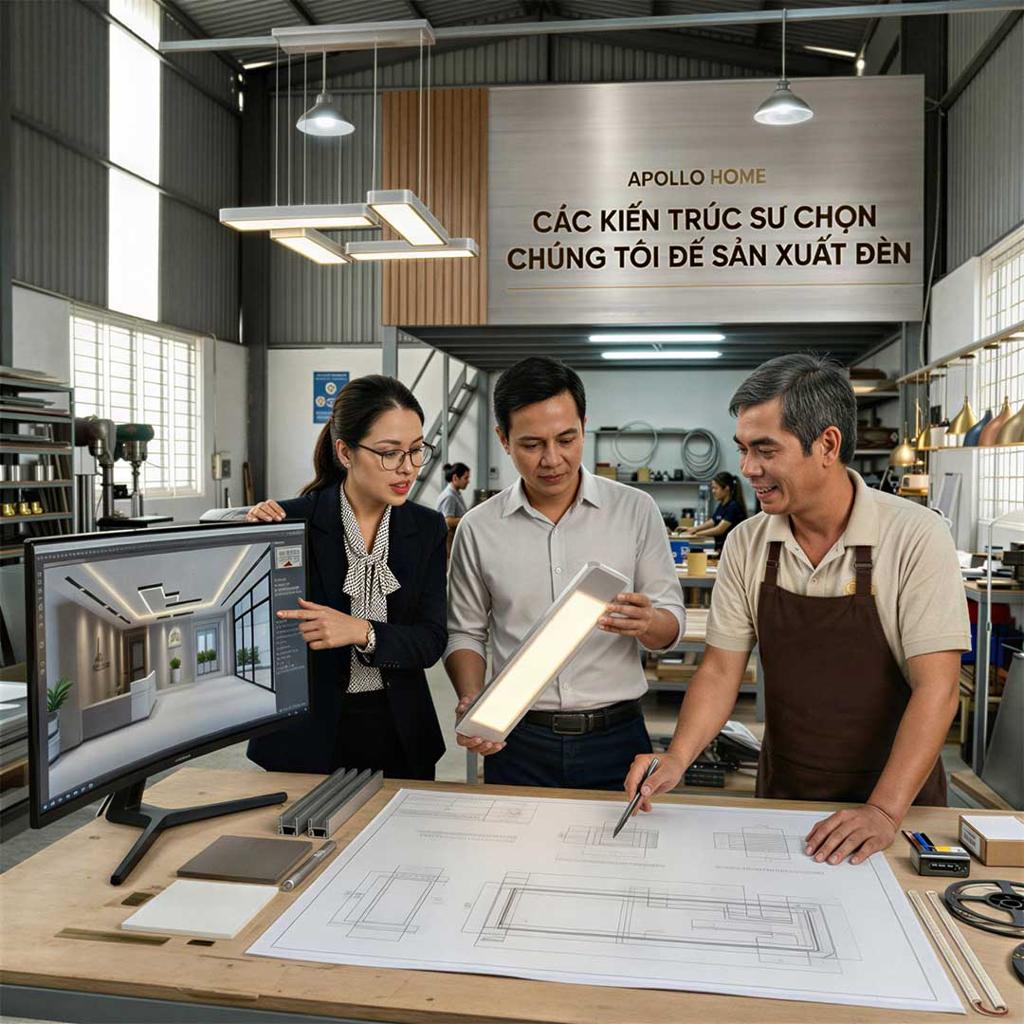
Stage 2: Engineering and 3D Modeling
The engineering team develops structural concepts and 3D models.
Depending on the product, this stage may involve mechanical design, electronic integration, optical development, and photometric simulation.
Stage 3: Prototype and Sample Development
A prototype helps designers evaluate proportions, materials, finishing, assembly, and lighting effects.
3D-printed models can support early visual and structural assessment.
Stage 4: Sample Testing and Design Refinement
The sample is reviewed against the agreed specifications.
Necessary adjustments may include housing dimensions, light output, optical components, surface finishes, and assembly details.
Stage 5: Tooling and Production
Once the final design is approved, customized molds, tooling, production procedures, and quality standards can be established.
Stage 6: Quality Inspection and Delivery
Products undergo appropriate inspections and tests according to the project specifications and destination market requirements.
Final packaging and shipping arrangements are then coordinated.
6. Important Considerations for Hotel and Commercial Lighting Projects
Hotel and commercial projects often involve multiple product categories and large quantities.
A coordinated lighting manufacturing partner should understand the importance of consistency across the entire project.
Key considerations include:
Design consistency: Different fixtures should maintain consistent colors, materials, finishes, and design details.
Installation requirements: Mounting dimensions, electrical connections, ceiling structures, and maintenance access should be confirmed.
Performance requirements: Light output, color temperature, color rendering, glare control, and dimming compatibility should be specified.
Environmental requirements: Products used in bathrooms, outdoor areas, or other demanding environments need suitable protection and materials.
Compliance: Applicable electrical safety and product certification requirements should be confirmed for the project market.
Production coordination: Samples, approved specifications, production schedules, and packaging requirements should be documented before mass production.
7. Why Work with an Experienced Custom Lighting Manufacturer?
Developing premium lighting requires the coordination of design, engineering, materials, electronics, manufacturing, and quality control.
A capable manufacturing partner can help designers and brands address technical challenges without losing sight of the original creative concept.
LEDVAST Lighting has been developing and manufacturing lighting products since 2009.
Its engineering capabilities cover structural, electronic, optical, finishing, and smart lighting development.
LEDVAST also provides 3D drawings and 3D-printed models to support early-stage product evaluation.
China and Thailand Manufacturing Resources
LEDVAST operates two production facilities:
- China Headquarters: Located in Zhongshan, Guangdong, supporting product development, engineering, and manufacturing.
- Thailand Factory: Located in Bangkok, supporting production for American and Southeast Asian markets.
These facilities provide additional flexibility for different product categories, customer requirements, and production planning.
Custom Manufacturing Across Multiple Lighting Categories
LEDVAST supports the development and production of:
- Commercial LED Lighting.
- Architectural Lighting.
- Residential Lighting.
- Hotel and Decorative Lighting.
- Pendant and Ceiling Lights.
- Wall Sconces.
- Bathroom and Mirror Lamps.
- Table and Floor Lamps.
- Smart Lighting Products.
This broad product capability is useful for designers and brands looking to develop coordinated lighting collections.
8. Build Your Next Premium Lighting Collection with LEDVAST
A successful lighting collection starts with a clear design vision and a manufacturing partner capable of bringing that vision to life.
Whether you are designing lighting for a luxury hotel, developing a contemporary decorative lighting collection, or expanding a premium lighting brand, customized manufacturing can help turn your ideas into differentiated products.
LEDVAST Lighting combines engineering expertise, customized production, and manufacturing resources in China and Thailand to support international lighting designers and brands.
Let’s develop your next lighting collection together.
Send us your design sketches, reference images, technical drawings, material preferences, and project requirements.
Our team will help evaluate your ideas and explore suitable manufacturing solutions.
Website: https://www.ledvastlighting.com/
Email: freddie@ledvastlighting.com
Phone: +86 136 8645 1912
Frequently Asked Questions
What is premium custom lighting?
Premium custom lighting refers to lighting fixtures developed with specific design, material, finish, technical, and functional requirements for high-end residential, hospitality, commercial, or architectural applications.
Can lighting designers work directly with a lighting manufacturer?
Yes. Designers can work directly with manufacturers to discuss product concepts, materials, dimensions, engineering feasibility, prototypes, and manufacturing requirements.
What information is needed to develop custom decorative lighting?
Useful information includes design sketches, reference images, product dimensions, material preferences, surface finishes, lighting specifications, installation requirements, and target costs.
Can custom lighting manufacturers produce hotel lighting collections?
Yes. Manufacturers with multiple product capabilities can develop coordinated pendant lights, wall sconces, ceiling lights, bathroom fixtures, table lamps, and other products for hospitality projects.
What materials are suitable for premium decorative lighting?
Aluminum, stainless steel, acrylic, glass, crystal, and other suitable materials can be considered depending on the design, application, structural requirements, and budget.
Can LEDVAST develop custom lighting products from 3D drawings?
Yes. LEDVAST provides engineering support, 3D drawing development, and 3D-printed models to assist product development.
Does LEDVAST manufacture smart lighting products?
Yes. LEDVAST develops smart lighting products and can discuss electronic and smart-function requirements according to individual project specifications.
Can LEDVAST manufacture custom lighting for the US and European markets?
Yes. LEDVAST serves international markets and provides OEM/ODM lighting manufacturing services for American and European customers. Applicable product certifications and specifications should be confirmed for each project.
How do I request a quotation for a premium custom lighting project?
Contact LEDVAST with your design references, technical requirements, estimated quantities, target market, and delivery expectations to begin a project evaluation.